
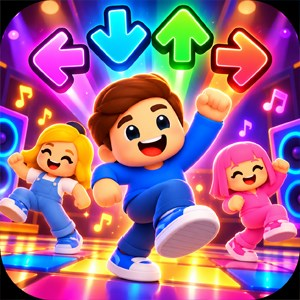
Mimic Voice Party is described as a music rhythm game built around directional notes and rap duels. The official instructions divide the screen into four large panels, each representing an arrow, and ask the player to tap the correct panel at the right moment. This first look uses the Microsoft Store listing, not a performance test or a played song.
The audience is someone who enjoys matching visible cues to a beat. Despite the word Voice in the title, the retained description establishes panel input rather than microphone analysis or singing. That distinction is useful before purchase: a product name should not create expectations about recording or vocal imitation that its instructions do not support.
Based on official store information. We have not tested this app hands-on.
What it does
Notes are represented by coloured up, down, left and right arrows. The player matches a note to the corresponding panel and times the action. Direction and timing are separate parts of that task: recognising the correct arrow does not automatically mean the input lands at the intended moment. The listing does not explain a scoring window or a particular combo system.
The description mentions multiple opponents and rap duels. That establishes a competitive theme within the game, but it does not establish live multiplayer, online matchmaking or another human controlling an opponent. We do not infer those modes. A duel can be a designed encounter, and the exact structure needs checking through official presentation.
The available instructions are too brief to promise a song count, difficulty ladder, editor, custom music or a progression system. They also do not establish keyboard mapping, controller support or how the stated tapping interaction translates to a particular Windows setup. Those omissions are not proof that features are absent; they are limits on what this first look can responsibly claim.
Before you install
Inspect an official sequence that shows both incoming notes and the player's response. Rhythm games depend on whether the cues, sound and input feel aligned. We have not measured timing accuracy, latency or audio behaviour. A video can communicate the intended loop, but it cannot reproduce exactly how an input device and sound setup will feel on your computer.
Check the supported controls before buying, particularly if touch input is not available. The instructions say tap, while the listing is for Windows; that wording alone does not establish every alternative. If remapping, one-handed play or a particular accessibility option is important, seek explicit current information rather than assuming genre conventions apply.
Coloured arrows provide a visible direction as well as a colour cue, but the actual readability still needs evaluation. We have not tested contrast, note speed, flashing effects or the availability of adjustments. Consult the current official rating and presentation for the intended player instead of deriving suitability solely from a music-game label.
Price and access
The retained US Microsoft Store offer displays $9.99. Confirm the current regional price, compatible systems and purchase terms before paying. The brief description does not establish a trial, downloadable song packs, subscriptions or other purchases, so we do not invent those arrangements.
The value question depends on the documented rhythm loop and the official material available, not an assumed catalogue size. A paid offer does not prove a long campaign, while a sparse description does not prove a short one. If content quantity or replay structure is decisive for you, resolve that question through the official page before making it part of the purchase calculation.
Our take
Mimic Voice Party's clearest proposition is a four-direction rhythm task wrapped in rap-duel presentation. That is easy to understand at the level of instructions: identify the arrow, choose the panel and respond in time. The actual musical selection, responsiveness and variety remain untested, so this is a qualified discovery rather than an endorsement of execution.
We have not played the game or assessed controls, latency, accessibility, privacy or stability. Our take is to verify the input route and watch an ordinary complete sequence before deciding. Choose it for the matching-and-timing activity it actually describes, not for an imagined voice-recording feature suggested by the title.
For a rhythm game, a successful moment should ideally make the relationship between cue and response understandable. A player learning the pattern needs to know whether an error came from direction or timing. The listing does not establish the feedback system, making that a useful feature to inspect rather than a benefit we can promise.
Opponents and duels can give songs a sense of progression, but the retained description does not explain how encounters connect. Do not assume a story campaign, unlock conditions or competitive rankings. The theme is documented; the surrounding structure remains an open question.
The appropriate first-look verdict is interest in a specific, simple input concept with substantial information still to verify. That is more useful than repeating the developer's enthusiastic adjectives as if they resulted from testing. A rhythm game's feel is central to its appeal, and feel cannot be established by the store description alone.
Sources
App icon from the official store listing.